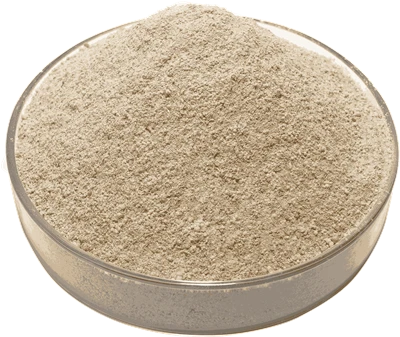
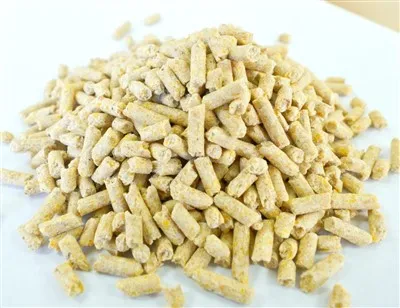
In large-scale livestock farming, premixe feed and concentrate feed are two crucial feed products. Many farmers often confuse the concepts and usage of the two. Simply put, premixes are the "nutritional core" of feed, while concentrates are an upgraded version of premixes, moving closer to complete feed. Understanding their differences is crucial for scientifically reducing costs and increasing efficiency.
Core Definition: What Are Premix Feed And Concentrate Feed?
Premix feed - The "Vitamin and Mineral Essence" of Feed
|
Analogy |
Imagine the multivitamin we take daily. It contains all the trace vitamins and minerals the human body needs, but we can't survive on vitamins alone; we also need to eat regularly (to consume energy, protein, etc.). |
|
Professional Explanation |
A premix is an intermediate feed product composed of one or more feed additives (vitamins, minerals, amino acids, pharmaceutical additives, etc.) uniformly mixed with a carrier or diluent. It has an extremely high nutrient concentration but does not contain the primary energy and protein components. Typically, premixes are added to complete feed at very low levels, with common additions ranging from 1%, 2%, 3%, 4%, and 5%.ETC |
Concentrate feed - A "Protein-Boosted" Version of Premix
|
Explanation |
Concentrate is a premix mixed with protein feed (such as soybean meal, fish meal, rapeseed meal, etc.) and macrominerals (such as calcium and phosphorus). It contains all the ingredients of the premix, with the addition of protein-rich raw materials, but also does not contain energy feed. Concentrates are added to a higher proportion of complete feed, typically between 15% and 40%. |
In-depth comparison of four key dimensions: Clear differences at a glance:
|
Comparison Dimensions |
Premix feed |
Concentrate Feed |
|
Core Ingredients: |
Vitamins, minerals, amino acids, pharmaceutical additives, and other trace components. |
Premixes + protein feed (such as soybean meal) + macrominerals such as calcium and phosphorus. |
|
Missing Ingredients: |
Lack of energy, protein, and macrominerals |
Lack of energy feed. |
|
Usage: |
Farmers need to purchase and mix key ingredients such as soybean meal, corn, and bran. |
Farmers only need to purchase and mix energy ingredients such as corn and bran. |
|
Addition Ratio: |
Low (usually 1%-5%) |
High (usually 15%-40%) |
|
Technical Threshold: |
High. Requires professional feed formulation knowledge and mixing equipment, and requires high-quality raw materials. |
Low. Users only need to mix one or two ingredients, making the process simple and error-prone. |
|
Cost Structure: |
Raw material (corn, soybean meal, etc.) procurement costs contribute significantly, but this also allows for greater formulation flexibility and facilitates the use of locally available, inexpensive raw materials |
Feed mills have already factored in the cost of protein ingredients, eliminating the hassle of procuring and storing them. |
|
Core users: |
Large-scale farms and feed mills with professional formulators and mixing equipment |
Small and medium-sized farms, family farms, and farmers who lack technical and purchasing advantages. |
How to Choose? There's no best, only the most suitable.
The choice between premix and concentrate depends on your farm scale, technical capabilities, and local resource availability.
Situations for Choosing Premix:
| Technical Capabilities | Possess or have access to professional feed formulation knowledge and can adjust formulas according to the different growth stages of livestock and poultry. |
| Scaled Farming | Sufficient funds and space to purchase and store large quantities of raw materials such as corn and soybean meal. |
| Cost Efficiency | Located in a major corn and soybean meal producing area, you have access to high-quality, affordable raw materials. Formulating your own feed can significantly reduce feed costs. |
| Mixing Equipment | Own a professional feed mixer to ensure uniform mixing of trace ingredients, preventing toxicity or nutritional imbalances. |
Choosing Concentrates
|
Low Technical Barrier |
Those seeking simplicity and hassle-free feeding are reluctant to worry about complex formula calculations. |
|
Small and medium-sized farms |
Lack sufficient warehouse space to store a variety of raw materials, or lack stable access to protein ingredients like soybean meal. |
|
Ensuring Nutritional Balance |
Trusting the professional formulas of branded feed mills, using concentrates effectively avoids nutritional issues caused by inconsistent quality of homemade ingredients. |
|
Risk Mitigation |
Improper use of premixes (e.g., uneven mixing) can easily lead to nutritional deficiencies or poisoning. Concentrates are manufactured by professional manufacturers and are therefore safer. |
Summary
In brief:
Premixes = core micronutrients, requiring you to prepare the "main course" (protein and energy).
Concentrates = core micronutrients + protein, requiring you to prepare the "rice" (energy).
There's no absolute superiority or inferiority; both are tools serving different farming scenarios. Understanding their fundamental differences and making wise choices based on your specific circumstances will ensure a more stable and sustainable farming journey. I hope this article helps you gain a clearer understanding of the fundamentals of concentrates and premixes.