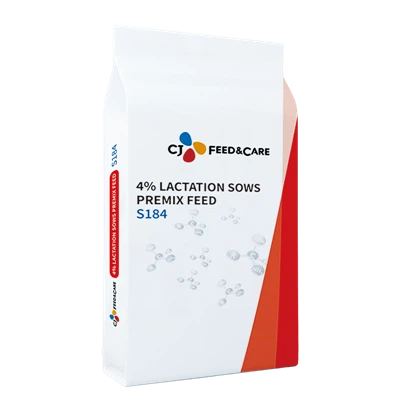
Particle size is a crucial factor in the formulation and performance of boar premix feed. As a supplier of boar premix feed, understanding the significance of particle size can help optimize the quality and effectiveness of our products. In this blog post, we will explore what particle size means in the context of boar premix feed, why it matters, and how it affects the overall feeding experience for boars.
Understanding Particle Size in Boar Premix Feed
Particle size refers to the diameter of individual particles in the feed. In boar premix feed, these particles can consist of various ingredients such as vitamins, minerals, amino acids, and other additives. The particle size can vary depending on the manufacturing process, the type of ingredients used, and the intended application of the feed.
Particle size is typically measured in micrometers (μm) or millimeters (mm). A smaller particle size indicates finer particles, while a larger particle size indicates coarser particles. The distribution of particle sizes in a feed sample is also important, as it can affect the uniformity of nutrient distribution and the digestibility of the feed.
Why Particle Size Matters in Boar Premix Feed
The particle size of boar premix feed can have a significant impact on several aspects of boar health and performance. Here are some key reasons why particle size matters:
1. Digestibility
One of the primary reasons why particle size is important in boar premix feed is its effect on digestibility. Finer particles have a larger surface area, which allows for better contact with digestive enzymes and increased nutrient absorption. This can lead to improved feed efficiency, better growth rates, and overall better health in boars.
On the other hand, coarser particles may be more difficult for boars to digest, leading to reduced nutrient utilization and potentially increased feed waste. In some cases, large particles may pass through the digestive tract undigested, resulting in lower feed efficiency and poor performance.
2. Nutrient Uniformity
Particle size also plays a role in ensuring the uniformity of nutrient distribution in the feed. When the particle size is consistent, the nutrients are more evenly distributed throughout the feed, reducing the risk of nutrient imbalances and ensuring that each boar receives the same amount of essential nutrients.


In contrast, a wide range of particle sizes can lead to segregation of ingredients during handling and storage, resulting in uneven nutrient distribution. This can lead to some boars receiving too much or too little of certain nutrients, which can have a negative impact on their health and performance.
3. Feed Intake
The particle size of boar premix feed can also affect feed intake. Boars may be more likely to consume feed with a consistent particle size, as it is easier to chew and swallow. Finer particles may also be more palatable, which can encourage boars to eat more and maintain a healthy appetite.
Conversely, feed with large or inconsistent particle sizes may be less appealing to boars, leading to reduced feed intake and potentially lower growth rates. In some cases, boars may even refuse to eat feed with an unappealing particle size, which can have serious consequences for their health and well-being.
4. Feed Handling and Storage
Particle size can also impact the handling and storage of boar premix feed. Finer particles are more likely to flow freely and are less prone to bridging or caking, which can make them easier to handle and transport. They also tend to have a longer shelf life, as they are less likely to be affected by moisture and other environmental factors.
In contrast, coarser particles may be more difficult to handle and may require special equipment or handling procedures. They may also be more prone to spoilage and deterioration during storage, which can reduce the quality and effectiveness of the feed.
Optimal Particle Size for Boar Premix Feed
Determining the optimal particle size for boar premix feed depends on several factors, including the age and size of the boars, the type of ingredients used, and the specific nutritional requirements of the animals. In general, a particle size range of 200 to 500 micrometers is considered ideal for boar premix feed.
This range provides a good balance between digestibility, nutrient uniformity, and feed intake. Finer particles within this range can improve nutrient absorption and feed efficiency, while coarser particles can help maintain the physical structure of the feed and prevent segregation.
However, it is important to note that the optimal particle size may vary depending on the specific needs of the boars. For example, younger boars may require a finer particle size to ensure proper digestion and nutrient absorption, while older boars may be able to tolerate coarser particles.
Controlling Particle Size in Boar Premix Feed Production
As a supplier of boar premix feed, we have several methods at our disposal to control the particle size of our products. Here are some common techniques used in the production of boar premix feed:
1. Grinding
Grinding is one of the most common methods used to control particle size in feed production. By using a grinder, we can reduce the size of the raw materials to the desired particle size range. The type of grinder used and the grinding settings can be adjusted to achieve the specific particle size requirements of the boar premix feed.
2. Screening
Screening is another important step in controlling particle size. After grinding, the feed is passed through a series of screens to separate the particles based on their size. This helps to ensure that the final product has a consistent particle size and that any oversized or undersized particles are removed.
3. Mixing
Proper mixing is essential to ensure the uniformity of the feed and to prevent segregation of ingredients. By using a high-quality mixer, we can ensure that the ingredients are thoroughly blended and that the particle size is consistent throughout the feed.
4. Quality Control
Regular quality control checks are essential to ensure that the particle size of the boar premix feed meets the desired specifications. We use advanced testing equipment to measure the particle size distribution of our products and to ensure that they are within the acceptable range.
Conclusion
In conclusion, particle size is a critical factor in the formulation and performance of boar premix feed. As a supplier of boar premix feed, we understand the importance of controlling particle size to ensure the digestibility, nutrient uniformity, and overall quality of our products. By using the latest technology and production techniques, we are able to produce boar premix feed with a consistent particle size that meets the specific needs of our customers.
If you are interested in learning more about our boar premix feed or other swine feed products, such as Piglet Starter Feed Super 2, Finisher Feeds for Pigs, or Alternative Milk for Piglets, please contact us to discuss your specific requirements. We are committed to providing high-quality feed products that meet the highest standards of nutrition and performance.
References
- National Research Council. (2012). Nutrient Requirements of Swine. Washington, DC: The National Academies Press.
- Feed Manufacturing Technology. (2018). Particle Size Analysis in Feed Production. Retrieved from [Website URL]
- Swine Health and Production. (2020). Importance of Particle Size in Swine Feed. Retrieved from [Website URL]