The differences between animal feed mills can be understood from several aspects.
The following is a detailed analysis of the differences between feed mills from several aspects:
By Product Type and Target Market
This is the most crucial difference.
Complete Feed Mills:
Produce "nutritionally complete meals" that can be directly fed to animals. This is the most common type and has the largest market.
Subcategories:
Further subdivided into pig feed mills, poultry feed mills, aquatic feed mills, ruminant feed mills, pet food mills, etc. The technical specializations are completely different (e.g., aquatic feed requires extrusion processes, while pet food emphasizes palatability and form).
Concentrated Feed Mills:
Produce the "nutritional essence," which users need to mix with energy ingredients such as corn before use. Commonly found in areas where farmers have their own grain sources.
Premixed Feed Mills:
Produce the "nutritional core" of "vitamins, minerals, and core additives." This type typically has the highest technical content and profit margin, requiring precise micro-mixing systems and strong R&D capabilities.
Feed Additive Mills:
Focus on single or compound additives, such as enzymes, probiotics, and antioxidants, more like fine chemical or biotechnology companies.
Classification by Production Scale and Operating Model
Large-scale Group Feed Mills:
Characteristics: Huge scale, high degree of automation, strong purchasing power, and powerful R&D centers and quality control systems.
Model: Often adopts a vertically integrated supply chain model of "feed + breeding + slaughtering" or a "company + farmer" model. Complete product lines and strong brand influence.
Examples: Core factories under companies like CP Group, New Hope Group, Haid Group, CJ feed and care and so on .
Medium-sized Regional Feed Mills:
Characteristics: Influential in a specific region, highly flexible, and better able to serve the local market and individual customer needs.
Model: May focus on the region's advantageous livestock species and maintain close relationships with local distributors and farms.
Small-scale Localized Feed Mills:
Characteristics: Low investment, simple processes, products may mainly be concentrates or premixes, flexible pricing, but relatively weaker quality control capabilities.
Model: Heavily reliant on local relationships and price competition.
Classification by Production Process and Equipment
Process Route:
Grinding before Batching:Mainstream process, high precision, high flexibility, suitable for formula variations.
Batching before Grinding:Simple process, low investment, but potentially higher energy consumption and losses, less flexibility.
Core Equipment Differences:
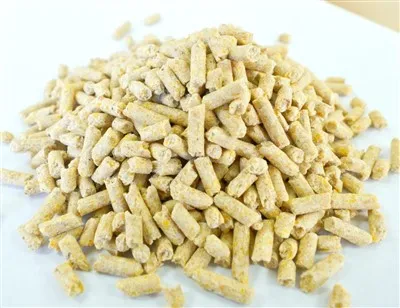
Livestock/Poultry Feed Plants:The core is the pellet mill, producing pelleted feed. Pellet quality (hardness, pulverization rate) is crucial.
Aquaculture Feed Plants: The core is the extruder, producing extruded floating or sinking feed. Extremely high requirements for cookedness and stability in water.
High-End Pet Food Plants: May involve multiple complex processes such as extrusion, drying, and spraying.
Automation and Intelligence Level:
Traditional factories: Traditional factories rely on manual feeding, packaging, and recording.
Modern factories: Modern factories use fully automated central control systems, automating the entire process from raw material warehousing, grinding, batching, mixing, pelleting to packaging, with traceable data.
By Technical Level and R&D Capability
Technology-Driven:
Possesses a professional animal nutrition R&D team and laboratory.
Can dynamically optimize formulas based on raw material prices (using "lowest cost formula software").
Can provide functional feeds for different growth stages (e.g., piglet creep feed, sow feed) and different health conditions (e.g., anti-diarrheal, improved immunity).
Focuses on the application research of additives (e.g., enzyme preparations, probiotics).
Production-Driven:
Focuses on stable production and cost reduction, using mature, fixed formulas.
Less R&D investment; mostly processes samples or imitates mainstream market products.
By Raw Material Procurement and Quality Control Capabilities
Procurement Sources:
Large factories directly purchase bulk raw materials such as corn and soybean meal from ports or production areas on a large scale, sometimes even with forward contracts.
Small factories mostly purchase from local traders, which may result in greater fluctuations in batch and quality stability.
Quality Control System:
High-quality factories: Have well-equipped quality control laboratories that test each batch of raw materials for moisture, protein, mycotoxins, etc., and perform routine analysis and sample retention on finished products.
Ordinary factories: May only perform simple visual inspections or outsource testing; their quality control processes are not rigorous.
Service and Marketing Models:
Direct Sales:
Selling directly to large-scale farms or integrated industrial enterprises.
Distribution Network:
Relying on a vast distributor network to cover small and medium-sized farmers; marketing and service capabilities are key.
Technology Service Oriented:
Feed sales are accompanied by a strong team of technical service personnel who provide value-added services such as breeding technology, disease prevention and control, and farm management. This is the core of current competition in the high-end feed market.
Summary and Comparison Table
|
Dimensions |
Large-scale modern feed mills |
small and medium-sized traditional feed mills |
|
Products |
Complete feed, premixed feed, concentrate feed, specialty feed, full range |
mainly concentrates and complete feeds, limited variety |
|
Scale |
Annual production of hundreds of thousands of tons or more |
annual production of tens of thousands of tons or less |
|
R&D |
Professional team, continuous new product development |
weak R&D, fixed or imitated formulas |
|
Quality Control |
Strict, comprehensive laboratory testing |
relatively lenient, reliance on experience |
|
Procurement |
Centralized procurement, low cost, large inventory |
flexible procurement, large cost fluctuations |
|
Marketing |
Brand marketing + technical services + supply chain |
price competition + personal relationships |
|
Customers |
Large-scale farms, integrated enterprises, distributor networks, trading companies |
local small and medium-sized and small size farmers, |
|
Raw materials |
traceability |
instability |
In conclusion, choosing a feed mill is not just about selecting a bag of feed, but also about selecting the technological stability, quality control reliability, service capabilities, and supply chain strength behind it. For farmers, it's essential to choose the most suitable feed mill partner based on their farm size, animal breeds, financial resources, and management expertise.