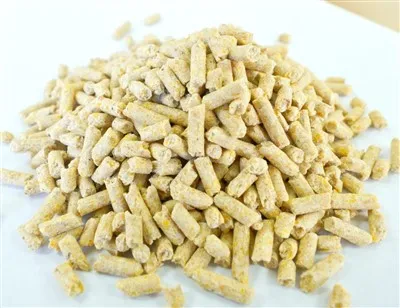
As the global population continues to grow and living standards continue to improve, the demand for animal-based foods (meat, eggs, and milk) is experiencing unprecedented growth. This trend presents a dual challenge for the livestock industry: meeting the enormous production demand while balancing environmental sustainability, animal welfare, and food safety. Within this context, animal husbandry and feed science, as an interdisciplinary field, plays a crucial role. This article explores the core components of feed science, its application in modern animal husbandry, and future development directions.
Feed Science: A Nutritional Revolution from "Eating Enough" to "Eating Well"
Traditional animal husbandry practices focus solely on ensuring animals are "fed to their full capacity." Modern feed science focuses on ensuring animals are "fed well." This involves maximizing production performance, health, and resource efficiency through precise nutrient formulation.
Precision Nutrition and Formulation Technology:
01. Concept: Accurately calculates the nutrient requirements (energy, protein, amino acids, minerals, vitamins, etc.) of different animal species, growth stages, physiological states (such as pregnancy and lactation), and production goals.
02. Application: Utilizing advanced theories such as the digestible amino acid model and net energy system to design diets, this replaces the traditional crude protein and total energy consumption system, avoiding nutrient waste and environmental pollution. For example, adding synthetic lysine and methionine to pig feed can significantly reduce soybean meal usage and reduce nitrogen emissions.
Development and Utilization of Unconventional Feed Resources:
Faced with the challenge of competing for food between humans and livestock, the development of unconventional feed resources such as soybean dregs, distiller's grains, insect protein (black soldier flies, maggots), and single-cell protein (algae, yeast) has become a research hotspot. These resources not only reduce feed costs but also provide new approaches for managing agricultural waste, aligning with the concept of a circular economy.
Feed Additives and Antibiotic-Free Farming:
Since the global implementation of the "antibiotic ban," finding alternatives to antibiotics has become a pressing task in feed science.
Functional additives such as probiotics, prebiotics, enzymes (phytase, non-starch polysaccharidase), plant extracts (essential oils, flavonoids), and organic acids are widely used. They protect animal health and maintain production performance by regulating intestinal flora balance, boosting immunity, inhibiting pathogens, and improving feed digestibility.

Animal Husbandry Management: A Deep Integration of Science and Technology
Advanced feed nutrition solutions require meticulous animal husbandry management to be effective
Precision Feeding System:
Utilizing automated equipment and sensors, this system enables phased, personalized, and precise feeding. The system dynamically adjusts feeding strategies based on the animal's real-time feed intake, weight gain, and even behavioral changes, ensuring every feed is used effectively.
Environmental Control and Animal Welfare:
The animal husbandry environment (temperature, humidity, ventilation, lighting, and stocking density) directly impacts animal stress levels and feed conversion rates. Modern environmental control systems leverage intelligent Internet of Things (IoT) technology to create a comfortable and stable environment for animals, reducing stress-related energy loss and health issues.
Data-Driven Decision-Making:

Big data and artificial intelligence (AI) technologies are increasingly being applied to the livestock industry. By analyzing historical production data and real-time monitoring data, AI models can predict animal growth trends, warn of disease risks, and optimize formulas and management plans, achieving a leap from "experience-based" to "intelligent" farming.
Future Challenges and Development Directions
Sustainable Development:
01. Emission Reduction and Energy Consumption Reduction: Reducing the carbon footprint and nitrogen and phosphorus emissions of livestock farming remain core challenges. Future research will focus on developing low-protein diets, using additives that reduce methane emissions (such as seaweed extracts), and improving manure treatment technologies.
02. Resource Efficiency: Further improving feed conversion ratios (FCR) and producing more meat, eggs, and milk with less grain is an eternal pursuit.
Scaled Application of Alternative Proteins:
Whether technologies such as cultured meat, insect protein, and algae protein can overcome cost bottlenecks and achieve large-scale commercial production will profoundly change the future landscape of the feed industry.
One Health Concept:
Recognizing that animal health, human health, and environmental health are closely interconnected, future animal husbandry and feed science will prioritize comprehensive food safety, antimicrobial resistance (AMR) control, and zoonotic disease prevention, safeguarding global public health.
Conclusion
Animal husbandry and feed science is no longer simply about "feeding." It integrates multiple disciplines, including animal nutrition, molecular biology, engineering, data science, and environmental science, becoming a core driving force in the transformation of the livestock industry toward efficiency, intelligence, sustainability, and humaneness. Facing future challenges, continuous technological innovation and cross-sector collaboration will be key to ensuring global food security and sustainable agricultural development. Through scientific feeding and careful management, we can better fulfill our responsibilities to the planet and life while meeting human needs.